
Connecting Communities: Talbot Thrive Drives Regional Trail Momentum
By Tracey Johns
On Maryland’s Eastern Shore, a growing coalition is working to make safe, connected mobility a reality for everyone. An integral part of that mission is the work of Talbot Thrive, a nonprofit focused on improving health, equity, and quality of life in Talbot County through better access to active transportation and community infrastructure. Its leaders see trails not as amenities, but as essential pathways to opportunity.
“We do this work because safer streets and connected paths are tied directly to health, dignity, and opportunity,” said Heather Grant, chair of Talbot County’s Bicycle and Pedestrian Advisory Committee and Executive Director and former Board Chair of Talbot Thrive.
“Our participation in the Maryland Eastern Shore Trail Network helps us learn from other communities, understand what has worked elsewhere, and avoid the mistakes that have left the Eastern Shore behind. Trails are part of how we fulfill our mission to support physical activity, improve mobility for people of all abilities, and strengthen community well-being.”
Grant said that Talbot Thrive sees firsthand the everyday needs that safe trails can meet. Parents want their children to bike without fear. Older adults seek independence after they stop driving. Veterans in recovery need quiet, predictable places to walk. Young people with sensory challenges benefit from calm routes close to nature.
Those needs shape the shared vision between Talbot Thrive and the Maryland Eastern Shore Trail Network (MESTN), a regional partnership of counties, towns, nonprofits, and agencies working from the same playbook to connect the Shore’s scattered paths.
MESTN has emerged because of a long-standing imbalance: the Eastern Shore comprises roughly 30 percent of Maryland’s land area, yet has barely 9 percent of its separated bike and pedestrian trails. Demand for outdoor access has grown sharply in recent years, especially since the pandemic.
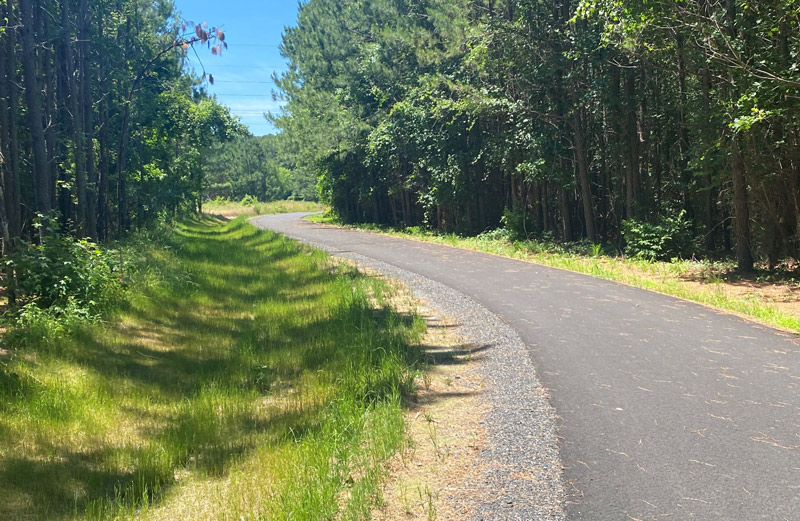
A paved stretch of Easton’s new Village trail provides a safe route for residents traveling between neighborhoods, jobs, and services without relying on a car. (photo courtesy of Town of Easton)
A Regional Effort Driven by Local Realities
Talbot Thrive’s commitment aligns squarely with MESTN’s goals. The network’s strategic plan calls for trails that support physical activity, provide safe transportation alternatives, expand wildlife corridors, preserve agricultural landscapes, and build new economic opportunities.
It also recognizes that many Shore communities lack the staff capacity or technical expertise to pursue complex trail projects on their own, a gap the coalition aims to close.
“Without a plan, you are just chasing grants,” Grant said. “With a plan, you can say, ‘Here is where crashes happen, here is where we lack shoulders or sidewalks, here is how we prioritize projects that make it safer for everyone.”
Talbot Thrive views planning as the foundation for long-term health and safety. By working alongside MESTN, the organization helps bring regional best practices home to Talbot County and strengthens partnerships with farmers, adjacent landowners, and residents with disabilities.
That outreach is significant where former rail corridors and rural rights-of-way intersect with active farmland or private property.
Easton’s On-the-Ground Perspective
In the Town of Easton, the work of connecting neighborhoods has taken shape in real time. Town Engineer Rick Van Emburgh said the past decade has shown how a local trail network can strengthen safety, mobility, and community life when projects are designed with residents in mind.
“We realized our public works crews were talented enough to build the trails in-house, and that saved the town a significant amount of money,” Van Emburgh said. “It also allowed us to use our workforce as part of our grant match instead of relying solely on taxpayer dollars.”
As Easton expanded its Rails-to-Trails system, concerns from adjacent property owners shaped the design. Van Emburgh said some residents believed the former rail bed was part of their yard, and that required patient, on-site conversations.
“We met with the neighbors, walked the alignment, and agreed on ways to protect their privacy,” he said. “That meant landscaping, visual buffers, and in some cases a privacy fence or a retaining wall where the old grades made the trail higher than their windows.”
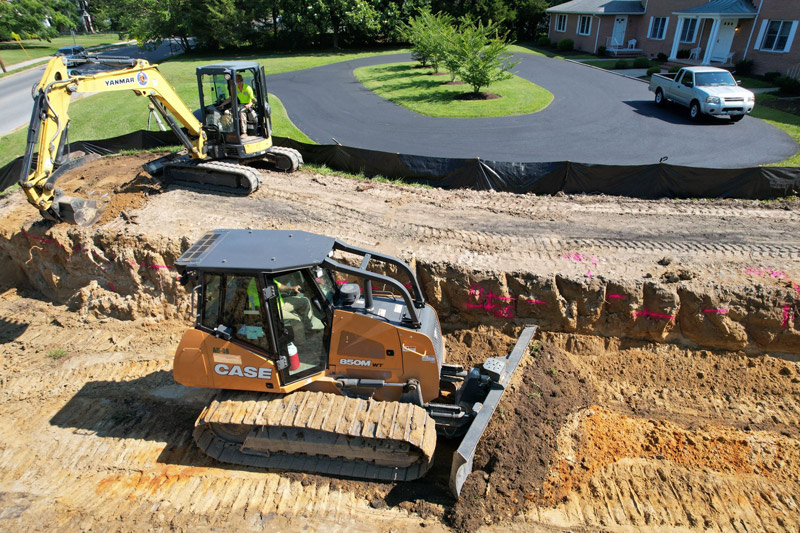
Town of Easton public works crews construct a segment of the local trail system, an in-house approach that has reduced costs and allowed the town to leverage labor as part of its grant match. (courtesy of the Town of Easton)
Those early worries were eased after the project opened. “People have said it is much better than they expected. The safety concerns they feared just have not materialized,” he said.
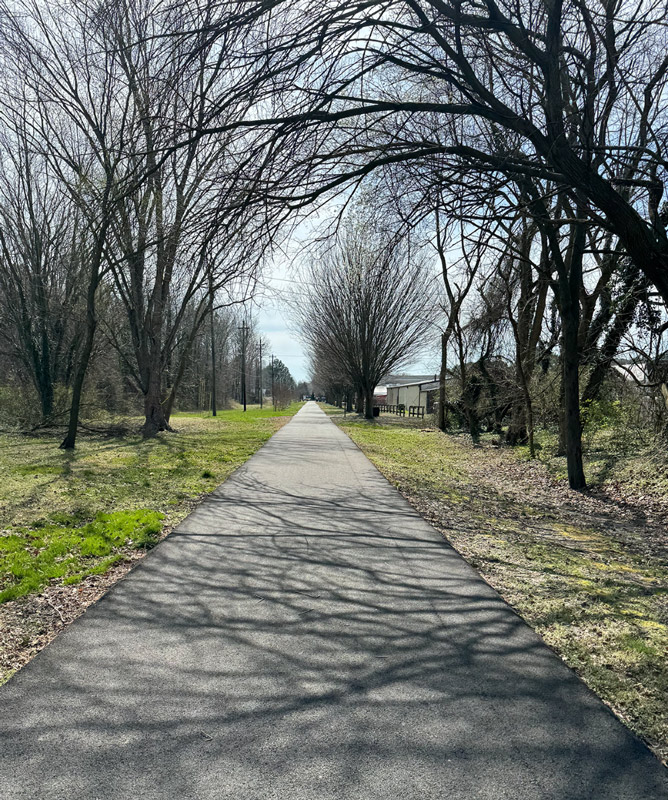
The Easton Rail Trail runs through a tree-lined corridor, illustrating how trails can offer calm, accessible routes that support physical activity, mental health, and everyday mobility. (courtesy of ESLC)
Van Emburgh said the town now sees how broad the need is. “There are people using the trail to get to work, people carrying laundry to the laundromat, and kids going to see their friends. It gives them a safe way to get from point A to point B,” he said.
Looking ahead, Easton is focused on bridging its greatest divide.
“Route 50 splits our town down the middle. We need safe connections between the east and west sides,” he said.
Safe crossings are under review by SHA at Dutchman’s Lane, Dover Road, and Goldsborough Street and the Town has an ambitious plan for 20 miles of trails within Town limits including a possible pedestrian bridge over Route 50 near the Talbot Humane Society.
“A bridge would be expensive, but it would be a safe way to get people across,” Van Emburgh said.
He said the town’s goal is simple. “We want to connect all of our neighborhoods and parks. Trails are extremely valuable to this community, and we hope to continue funding and building them.”
Costs, Creativity, and the Path Forward
Building paved, ADA-compliant trails can cost about $1 million per mile, said Owen Bailey of the Eastern Shore Land Conservancy, who also serves as MESTN’s vice chair.
“When you look at the many miles of potential trail connections, things get very expensive very quickly,” he said. “But good news is we have options and opportunities that we should be exploring.”
Because of those costs, planners support a “right-sized” mix of trail types. Paved trails are critical in towns where people live, work, and attend school. In rural areas, natural-surface trails made of mulch or crushed stone can provide meaningful access at a fraction of the price.
“The first version of a trail could be mulch or crushed stone,” Bailey said. “Something that costs tens of thousands of dollars a mile instead of millions of dollars.”
Even so, trail projects remain relatively low-cost compared to building new roads and tend to deliver outsized benefits for communities, including improved safety, connectivity, and quality of life.
Incremental pathways, said MESTN chair Sue Simmons, help communities adjust and see the benefit. “When people see a well-maintained path used by neighbors, kids in ball uniforms, seniors with walking sticks, they start to see it as theirs,” she said.
Mobility, Health, and Human Dignity
Public health experts consistently link everyday walking and biking access to lower obesity and diabetes rates and to reduced anxiety and depression. Trails also support “community mobility,” a concept Simmons and others describe as a justice issue for people who use wheelchairs, older adults, and teenagers without access to a car.
Examples across the Shore show what is possible. Somerset County’s Terrapin Run Trail, a 4.5-mile corridor between Crisfield and Marion, has become a daily exercise route, a gathering space, and a safe link for people in county programs.
“It is not just a pretty place to walk,” said county Recreation and Parks Director Clint Sterling. “We are seeing people incorporate it into their rehabilitation, their mental health routines, even their transportation.”
Respecting Agriculture and Rural Character
Trail planning on the Eastern Shore must also take farmers’ concerns into account. Some landowners believed that former rail corridors would revert to them when trains stopped running, but many have remained state or railroad property.
“That disconnect between what people believed and what the deeds actually say is at the heart of a lot of anger, and understandably so,” Bailey said.
Advocates emphasize early communication, investments in buffers and fencing, paving driveways and access points, and designs that respect farm operations.
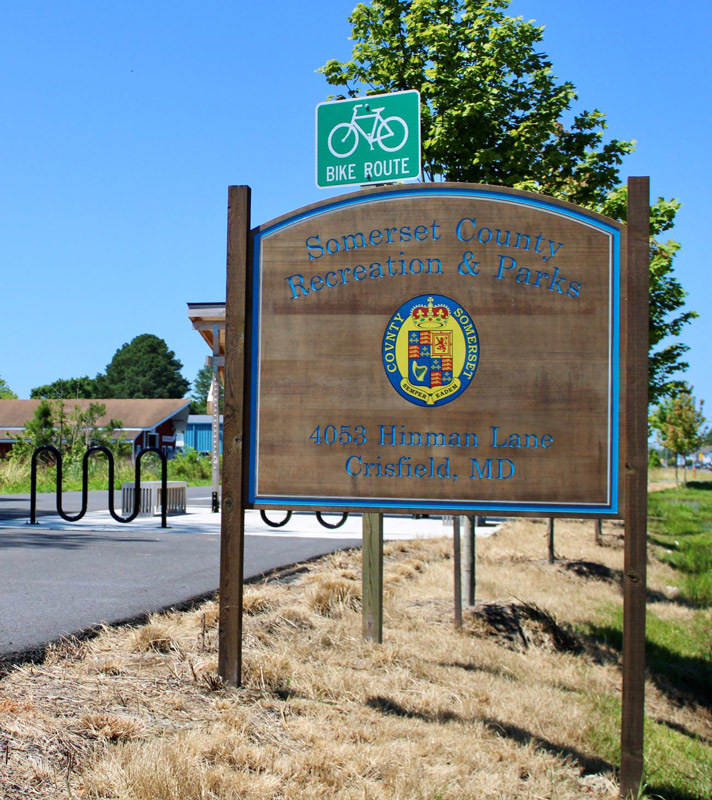
Somerset County’s Terrapin Run Trail stretches between Crisfield and Marion, serving as a daily exercise route, a transportation link, and a community gathering space. (courtesy of ESLC)
Talbot Thrive and ESLC intend to meet with farmers and landowners early in the process, before there is a plan or an agenda item at a planning commission or county council meeting. Practitioners with a track record of successful rural trail projects recommend meeting stakeholders where they are, providing clear guidance on right-of-way, and demonstrating how thoughtful trail design can enhance safety alongside agricultural operations.
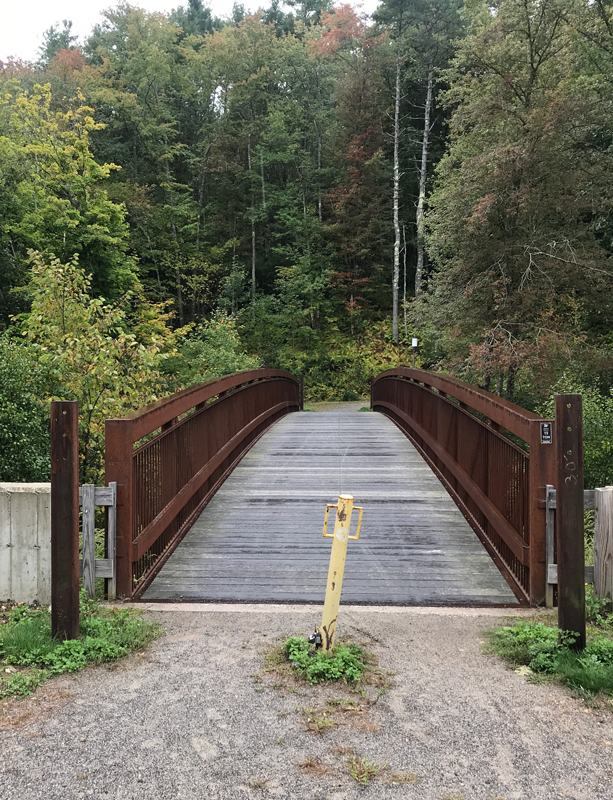
A bridge over the Ware River in Barre, MA on the Mass Central Rail Trail.
Economic Potential Across the Region
Well-connected trails can support small businesses, agritourism, and local economies. Across the country, homes and businesses near trails see higher values, and towns that embrace trail networks often develop retail farm and u-pick berry operations, cafés, outfitters, and lodging that serve new visitors. The Great Allegheny Passage and the Washington Old Dominion Trail offer powerful models of how that works.
On the Shore, that potential is already emerging. In Somerset County, visiting cyclists talk about making “a weekend of it” once Terrapin Run connects with more routes. “That is real money for small towns that have lost other industries,” Sterling said.
A Larger Vision for the Shore
Policy leaders agree that the question is not whether trails matter. The challenge is how to convert scattered projects into a connected network that serves residents of all ages and abilities. MESTN’s plan calls for funded master plans, prioritized connections to schools, parks, health care, and jobs, and a combination of paved and natural-surface trails to meet different needs.
Simmons said the next decade will define whether the Shore continues to fall behind or becomes a model for rural mobility.
“Trails are not about turning the Eastern Shore into somewhere else,” she said. “They are about helping the people who already live here move safely, live healthier lives, and stay connected to the land and each other. If we can agree on that, the rest is just planning and persistence.”
A Statewide Framework Taking Shape
While organizations such as Talbot Thrive and the Maryland Eastern Shore Trail Network advance projects locally, state agencies are working to create the conditions that allow those investments to function as a connected system.
Maryland Department of Natural Resources Director of Outdoor Recreation Sandra Olek says trail development increasingly depends on coordination across state, county, and municipal boundaries.
She says DNR manages more than 500,000 acres statewide and oversees roughly 1,100 miles of trails, placing the agency at the intersection of land management, transportation planning, and community access.
“When people talk about trails, they often mean very different things,” Olek said. “From the state perspective, we may be focused on natural-surface trails on public lands, while counties are planning shared-use transportation trails. The challenge is making sure those systems align, because the users do not see them as separate.”
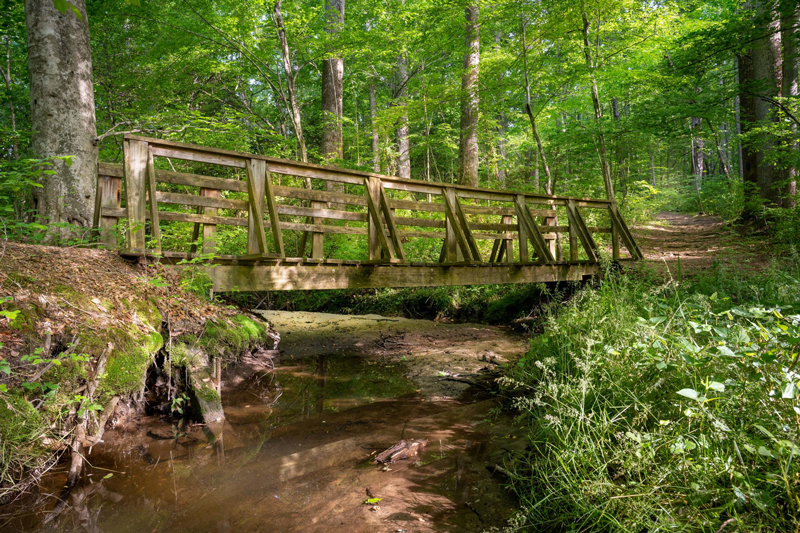
A boardwalk segment of the Tuckahoe Lake Trail crosses wetlands, highlighting how trail design can balance recreation, environmental protection, and access to nature. (Photo courtesy of the Eastern Shore Land Conservancy.)
“It takes a lot of interagency coordination and a lot of jurisdictions rowing in the same direction,” she said.
Recent statewide transportation trail planning efforts are helping address that challenge by mapping existing and proposed trails, identifying gaps, and clarifying where strategic connections can link communities to parks, employment centers, health care, and other essentials.
From a policy standpoint, Olek emphasized that trails should be evaluated as infrastructure with multiple public benefits.
“These trails function as linear parks,” she said. “They support public health, social connection, and safe mobility, especially for people who do not drive or can no longer drive.”
Short, accessible trail segments, she noted, can deliver meaningful returns without the cost of fully paved facilities, particularly in rural areas.
Maryland is also exploring the designation of “destination trails,” cross-jurisdictional routes that highlight scenic, historical, and cultural assets while supporting tourism and local economies. For the Eastern Shore, Olek said the policy takeaway is straightforward.
“The benefit is there to be had,” she said. “But it only works when planning, funding, and implementation are coordinated over time.”
 Deutsch
  English
  Español de México
  Français
  Italiano