
Keeping Our Streets Safe is Everyone's Responsibility
Roads are meant to be shared. Whether you’re behind the wheel or on two wheels, cyclists and motorists have the same rights — and the same responsibilities. A few simple safety practices go a long way toward keeping everyone on Talbot County roads safe.
For Bike Riders
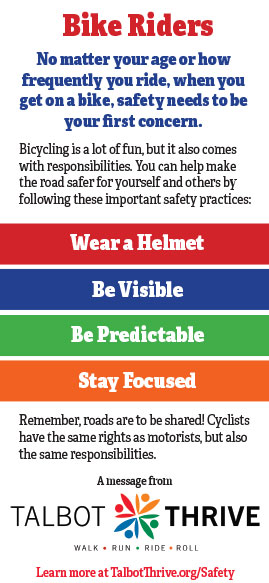
No matter your age or how often you ride, safety should always come first.
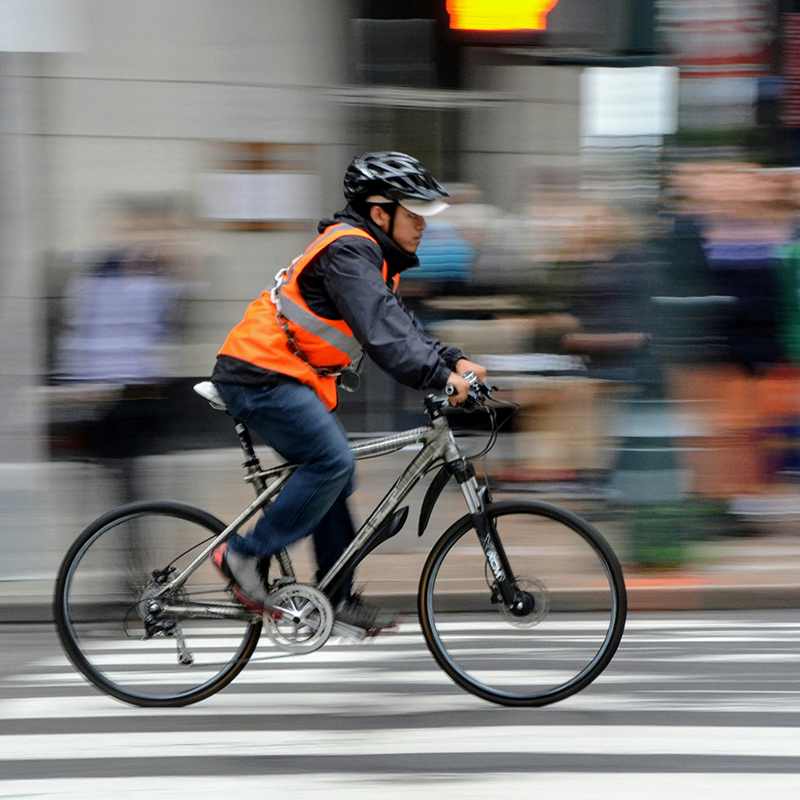
Wear a Helmet
Helmets are required for all riders under age 16 in the State of Maryland. They reduce serious head and brain injuries and should be worn on any micromobility device, including bikes, scooters, and skateboards. Find one that’s comfortable, snug, and doesn’t rock from side to side.
Be Visible
Being highly visible helps drivers see you sooner, giving them more time to respond. Headlights, taillights, bright clothing, and reflective gear — day or night — make it easier for others to spot you on the road. Skip the dark clothing.
Be Predictable
Following traffic laws and using hand signals lets drivers know where you’re headed. When there’s no bike lane, cyclists are allowed to ride in the lane with traffic. Use hand signals to let cars know your next move so they can give you space in time.
Stay Focused
Don’t let your phone, cycling tech, or earbuds take your attention away from riding (note: it’s illegal to ride with two earbuds in Maryland). Staying alert to what’s around you makes you a safer rider.
For Motorists
Driving near cyclists comes with a few key things to keep in mind.
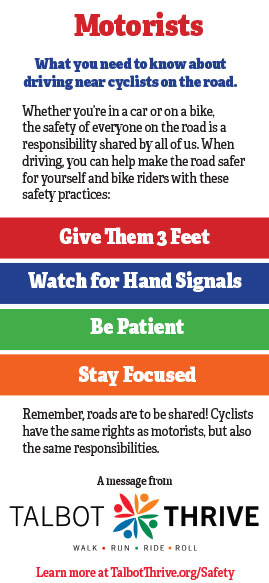
Give Them 3 Feet
Drivers must give a minimum of 3 feet of space when passing a bicycle, at a speed slow enough to ensure safety. Maryland law allows drivers to cross the center of the roadway to pass a cyclist when it’s safe to do so.
Watch for Hand Signals
Cyclists use hand signals to show you their next move. Pay attention and know what they mean. Keep a safe following distance and give yourself time to react.
Be Patient
Bicycles may use any portion of the lane on roads with a posted speed limit of 50 mph or lower when there’s no shoulder or the lane is narrow. When turning, yield to bicyclists the same way you would to other motorists.
Stay Focused
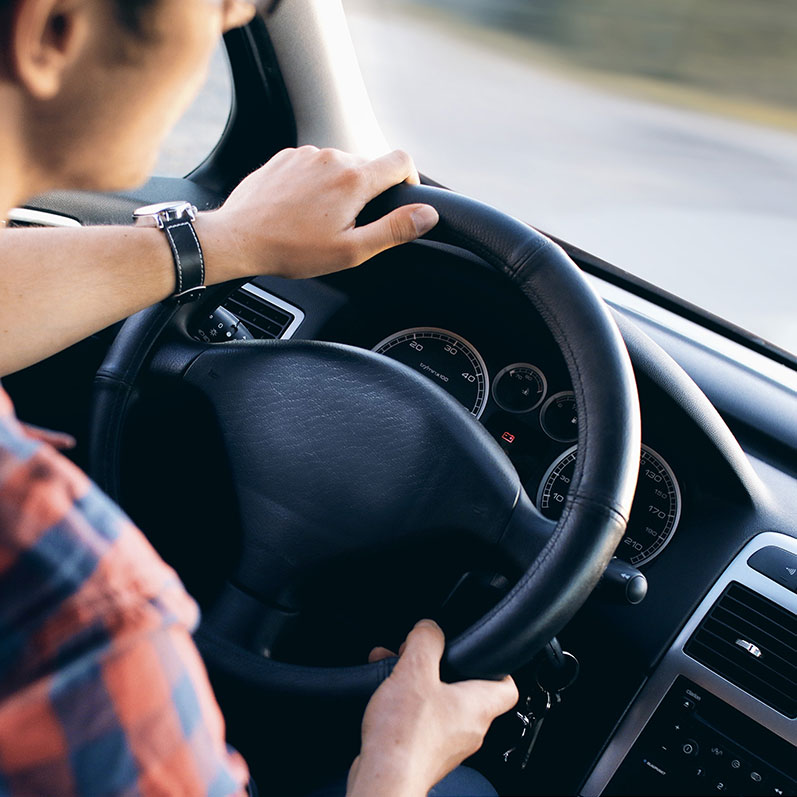
Stay off your phone and stay aware — you may encounter a cyclist on any road, in any weather, day or night. Be especially cautious on right turns, and never pass a cyclist if you’re about to turn right. Before opening your car door, check for approaching cyclists.
Concerned about e-bikes and e-moto use in the community? Check out our page “Know Your Ride. Know the Law.”
🚲 Myth-Busting: “The Road is for Cars”
Myth: Cars have exclusive rights to the road.
Not true. Roads are public infrastructure for all legal users — including bicycles. Maryland law treats cyclists as vehicle operators with the same rights to the road as motorists.
Myth: Cyclists don’t pay for the roads, so they shouldn’t be on them.
This one’s simply incorrect. Road funding comes from a mix of sources — general fund revenue, property taxes, income taxes, and local/state funding — not just gas taxes. Cyclists are taxpayers too, and most adult cyclists also own cars. Riding a bike doesn’t exempt anyone from the taxes that fund local roads; if anything, it reduces wear on them.
Myth: A cyclist rolling a stop sign is just as dangerous as a driver doing it.
Physics says otherwise. A cyclist weighs somewhere around 200 lbs combined with their bike. The average car weighs roughly 4,000 lbs and is moving much faster. The potential for serious harm — to others and to property — is not remotely equivalent. That’s exactly why drivers are asked to give cyclists extra space, patience, and attention: the consequences of a mistake fall disproportionately on the more vulnerable road user.
Bottom line: Sharing the road isn’t a favor cyclists are asking for — it’s the law, and it’s how Talbot County stays safe for everyone.
Click on the rack card images below to download a PDF.
Need printed copies at your location? Email heather@talbotthrive.org.
 Español de México
  English
  Français
  Italiano
  Deutsch