
In towns and cities across the country, leaders ask: Which infrastructure projects will actually shift behavior? The recent evidence is clear: to drive walking and bicycling at scale, we must move beyond basic lanes and sidewalks. We must design with a focus on comfort, connectivity, directness and safety—and build infrastructure that people feel comfortable using every day.
A major global study by UCLA and Google of over 11,500 cities found that urban density and street redesign were the strongest predictors of high walking and cycling rates—stronger than climate or income. The researchers suggest that if all cities built networks like Copenhagen, walking and cycling could increase by roughly 663 billion km per year and global carbon emissions drop ~6%. Phys.org+1
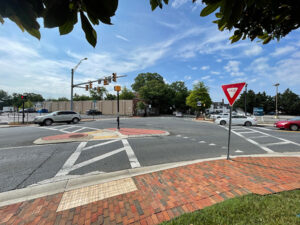
What does this mean for local advocates and leaders? It means the magic is in connected, comfortable networks, not isolated segments. One meta‑analysis of urban trail investments found modest but meaningful increases in physical activity (SMD ≈ 0.12 overall; ≈ 0.14 for those living closest) when residents were proximal to trail upgrades. BioMed Central
That tells us: proximity and access matter!
It also means we need rich, street‑level diagnostics such as the “bikeability” index recently developed in Belgium. This tool measures micro‑level indicators like safety, comfort, directness and coherence to pinpoint where the infrastructure falls short and where it works. MDPI
By applying such frameworks, planners can prioritise the investments that will make the biggest difference.
So: what must planners, local governments and advocates focus on?
- Build protected, direct routes – bike lanes and pedestrian paths should connect homes, schools, jobs and transit hubs, not dead‑end into major roads.
- Design for everyday comfort – consider lighting, buffer distances, crossings, smooth surfaces, shade, visibility and comfort for the least confident users.
- Locate within walking distance – ensure new trails, sidewalks and paths are reachable by people in their daily lives. Evidence shows stronger effects when proximity is high.
- Redesign streets comprehensively – reducing vehicle lane widths, slowing traffic, installing street trees, better signal timing and pedestrian priority all matter enormously.
- Measure success by use and behaviour – track mode shift, activity levels, safety outcomes and equitable access—not just miles of new infrastructure.
When communities design for movement in this way, they unlock the full return: safer streets, healthier and more active residents, less pollution and stronger neighbourhoods. The infrastructure isn’t an expense—it’s an investment in public health, equity and community vitality.
For advocates and municipal partners alike, the message is clear: build infrastructure that feels comfortable and connected and people will move. The time is now.
 Français
  English
  Español de México
  Italiano
  Deutsch